Why Art Classrooms Are Quietly Returning to the Hand
A Subtle but Significant Shift
Across North American schools, a quiet correction is taking place.
After years of rapid digital integration, many art programs are re-emphasizing:
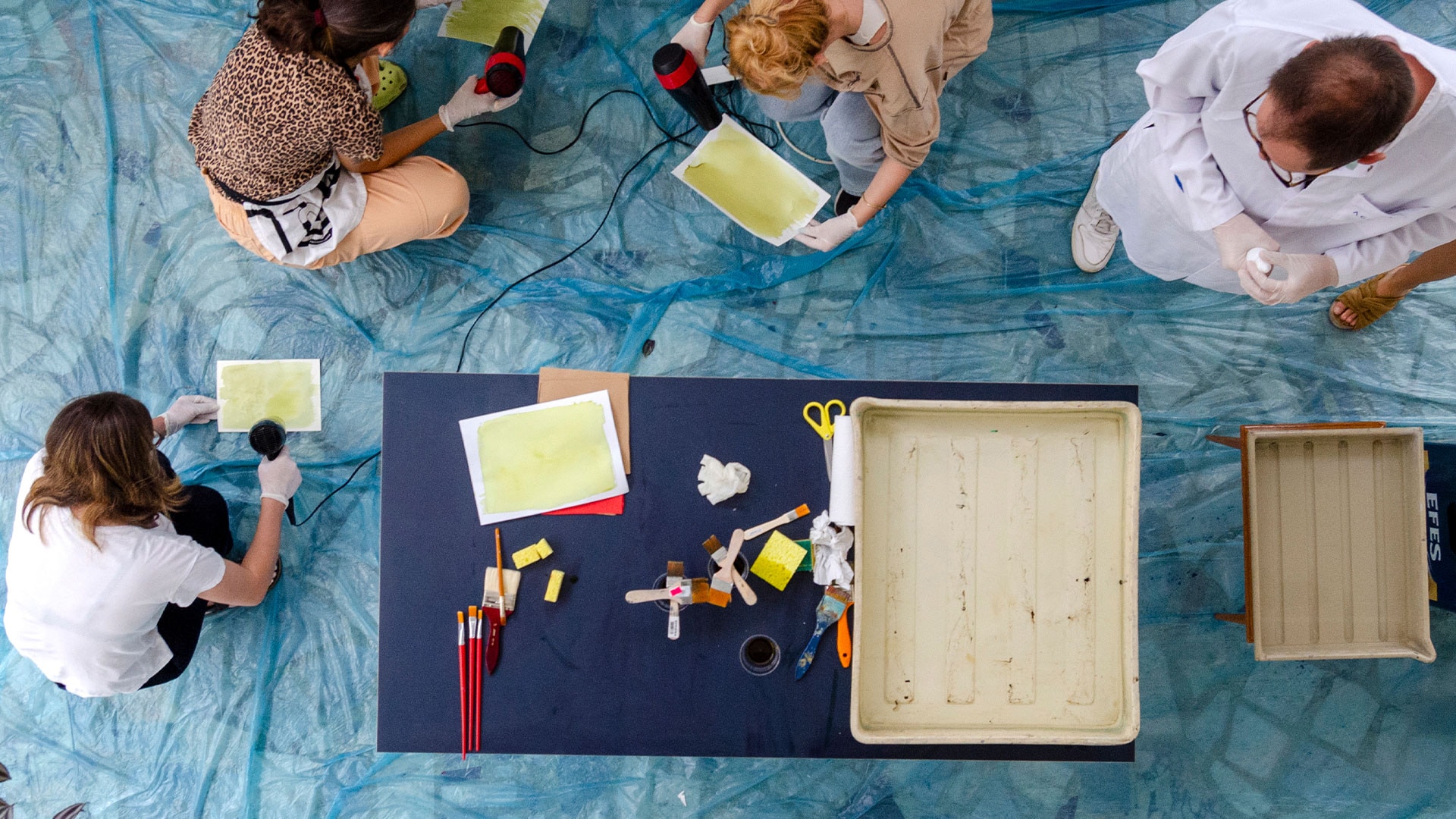
- Printmaking
- Fiber arts
- Cyanotype and alternative processes
- Material-based experimentation
This is not nostalgia. It is recalibration.
When tablets and AI can generate infinite imagery, educators are recognizing a simple truth:
Image production is not the same as cognitive formation.
The Hidden Cost of Frictionless Creation
Digital creation offers speed and reversibility.
Undo is immediate. Perfection is editable.
But frictionless environments produce unintended consequences:
- Shortened attention span
- Reduced tolerance for failure
- Weakening of hand–brain coordination
Material practice is fundamentally different.
It introduces:
- Irreversibility
- Physical resistance
- Time investment
- Sensory feedback
This resistance is not a limitation. It is cognitive training.
Deep thinking requires friction.
The hand slows the mind just enough to let judgment form.
What Parents Should Consider
If a student creates exclusively on screens, they train efficiency.
But the future will not reward efficiency alone.
It will reward discernment.
Discernment develops through:
- Trial and error
- Physical iteration
- Delayed results
- Intentional decision-making
Material practice builds structural cognition, not just visual output.
Our Position
We do not reject digital tools.
But we reject premature dependence on zero-resistance creation.
True creativity emerges from the integration of:
- Hand control
- Observational precision
- Logical abstraction
- Emotional clarity
Digital is a layer.
Material training is the foundation.